

Share This Article
Author Introduction
Arundhati Roy is an internationally acclaimed Indian author, political activist, and essayist. She rose to prominence with her debut novel The God of Small Things (1997), which won the Booker Prize, making her one of the most celebrated literary voices from India. Her works are known for their poetic prose, deep social commentary, and fearless political engagement.
Early Life & Background
Born on November 24, 1961, in Shillong, Meghalaya, Arundhati Roy grew up in Kerala with her mother, Mary Roy, a prominent women’s rights activist. She studied architecture at the School of Planning and Architecture, New Delhi, but soon found her passion for storytelling and screenwriting. Her early experiences in Kerala, combined with her architectural training, influenced her unique way of observing detail and structure in both life and literature.
Writing Journey
Roy’s path to becoming a novelist was unconventional. She initially worked as a screenplay writer and appeared in films before devoting herself fully to literature. Her debut novel, The God of Small Things, published in 1997, became a global phenomenon, praised for its rich, lyrical narrative and exploration of caste, love, and social inequality in Kerala.
After the success of her debut, Roy shifted her focus to non-fiction and political writing. She became one of India’s most outspoken voices on issues such as environmental justice, human rights, and anti-globalization, authoring several essays and collections. She returned to fiction after two decades with The Ministry of Utmost Happiness (2017), reaffirming her stature as a novelist of global significance.
Published Works
Novels:
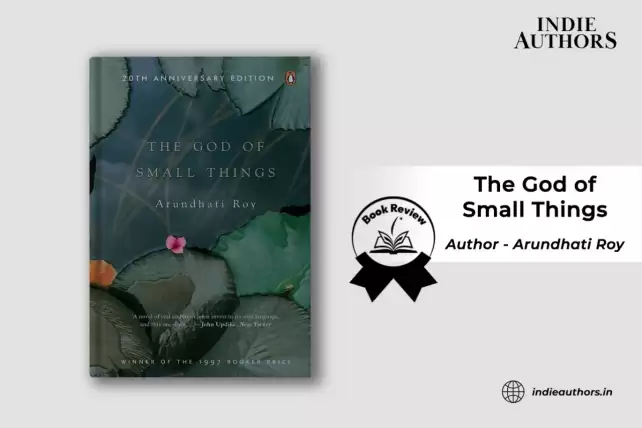
- The God of Small Things (1997) – Winner of the Booker Prize.
- The Ministry of Utmost Happiness (2017) – Longlisted for the Booker Prize.
- Non-Fiction & Essays:
- The Algebra of Infinite Justice (2001)
- An Ordinary Person’s Guide to Empire (2004)
- Listening to Grasshoppers: Field Notes on Democracy (2009)
- Broken Republic: Three Essays (2011)
- Capitalism: A Ghost Story (2014)
- Azadi: Freedom. Fascism. Fiction. (2020)
Writing Style & Themes
Arundhati Roy’s writing is characterized by its lyrical prose, deep symbolism, and layered narratives. Her fiction blends personal stories with political undertones, while her essays directly confront pressing global and Indian issues. Themes often explored in her works include:
- Caste and class inequality
- Love, family, and memory
- Environmental struggles and displacement
- Democracy, nationalism, and freedom
Achievements & Recognition
- Booker Prize (1997) for The God of Small Things.
- PEN Pinter Prize (2004, shared with Harold Pinter) for her work in human rights.
- Norman Mailer Prize for Distinguished Writing (2011).
- Featured on TIME’s list of the 100 most influential people in the world.
- Her works have been translated into more than 40 languages and continue to spark global debates.
Beyond Writing
Apart from being a novelist, Roy is one of India’s most recognized political activists. She has consistently spoken out on issues such as dam projects displacing rural communities, the rights of tribal populations, religious intolerance, and the erosion of democratic freedoms. Her activism has often sparked controversy but also earned her admiration for courage and integrity.
Future Projects
While Roy has not announced her next novel, she continues to write and publish essays addressing contemporary politics and global justice. Readers and critics alike await her future contributions to both literature and political thought.
Quotes / Writing Philosophy
“Another world is not only possible, she is on her way. On a quiet day, I can hear her breathing.” – Arundhati Roy