
Share This Article
Book Review: Tomb of Sand
Author: Geetanjali Shree

Rating: 4.7/5
Overview:
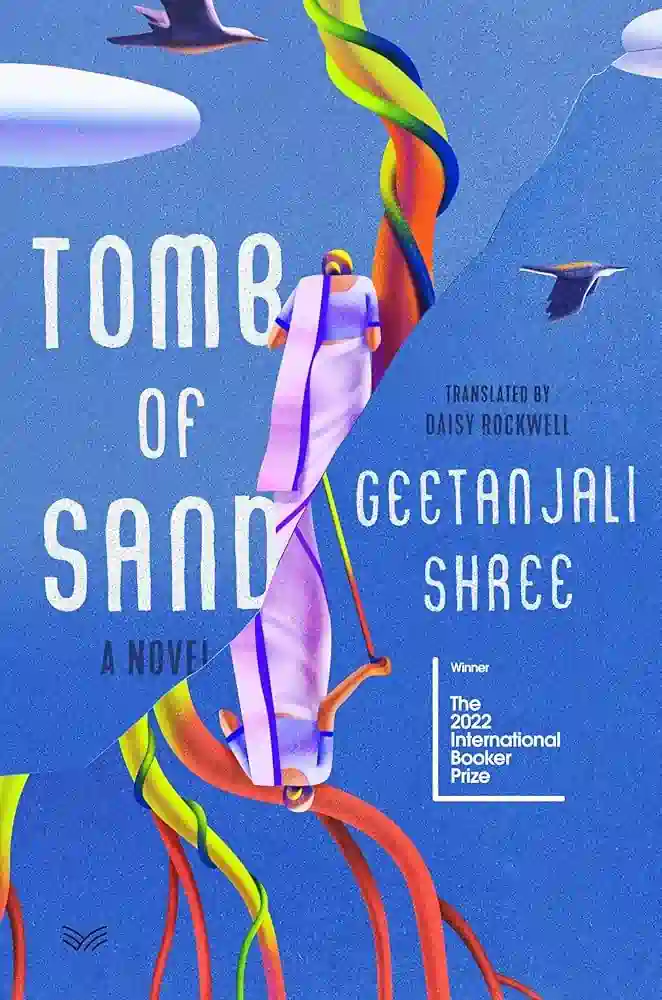
Geetanjali Shree’s Tomb of Sand, the winner of the 2022 International Booker Prize, is a layered and thought-provoking novel that explores themes of grief, womanhood, and identity. The story follows an 80-year-old woman who, after the death of her husband, sinks into depression but ultimately rediscovers life in the most unexpected ways. Her journey takes her across the border into Pakistan, where she confronts the wounds of Partition and reshapes her own identity.
The novel, translated beautifully by Daisy Rockwell, combines playfulness with philosophical depth, offering an intimate exploration of India’s cultural and historical fabric. Shree’s writing is bold, combining humor with tragedy to create a narrative that is both profound and daring. The complex structure and length of the book might feel demanding to some readers, especially those who prefer fast-paced fiction, but for those willing to invest the time, the book offers a truly rewarding experience.
Strengths:
- Unique Narrative Style: Geetanjali Shree’s writing is distinct, blending playfulness with philosophical reflection in a way that keeps readers engaged and reflective.
- Deep Cultural Insight: The novel provides a profound insight into India’s cultural and historical contexts, particularly around the effects of Partition.
Weaknesses:
- Can Feel Overwhelming: The length and intricate structure of the book can be overwhelming at times, particularly for readers who prefer more straightforward, fast-paced narratives.
Verdict:
Tomb of Sand is a daring and memorable novel that redefines the concepts of grief, womanhood, and identity. It is a book that challenges conventional storytelling and offers a fresh perspective on life’s complexities. Though it can be demanding in parts, the book rewards readers with a deeply fulfilling experience.
Buy the Book:
You can purchase Tomb of Sand by Geetanjali Shree from Amazon: Buy on Amazon
Frequently Asked Questions (FAQ)
1. What is *Tomb of Sand* about?
Tomb of Sand follows an 80-year-old woman who, after the loss of her husband, embarks on a transformative journey of self-discovery. She confronts the emotional scars of India’s Partition and reshapes her own identity, making the novel a deep exploration of grief and womanhood.
2. How is the novel structured?
The novel has a complex structure with multiple layers of storytelling. It blends humor and tragedy, with moments of philosophical reflection. The narrative takes readers across borders and through different timelines, which can be demanding for some readers but rewarding for those who immerse themselves fully.
3. What themes does *Tomb of Sand* explore?
The novel delves into themes of grief, womanhood, identity, and the impact of Partition. It also explores how personal histories intersect with cultural and historical moments, providing a rich and multifaceted perspective on the human experience.
4. Is *Tomb of Sand* suitable for all readers?
While the book offers profound insights and a unique narrative style, it may not appeal to readers who prefer fast-paced fiction. The length and intricate structure may feel overwhelming for some, but for those who enjoy contemplative and layered storytelling, it offers a truly rewarding experience.
5. How is the translation of the novel?
The novel has been translated beautifully by Daisy Rockwell. The translation preserves the depth and complexity of Geetanjali Shree’s original work, ensuring that readers experience the full emotional and philosophical range of the novel.