
Share This Article
Introduction
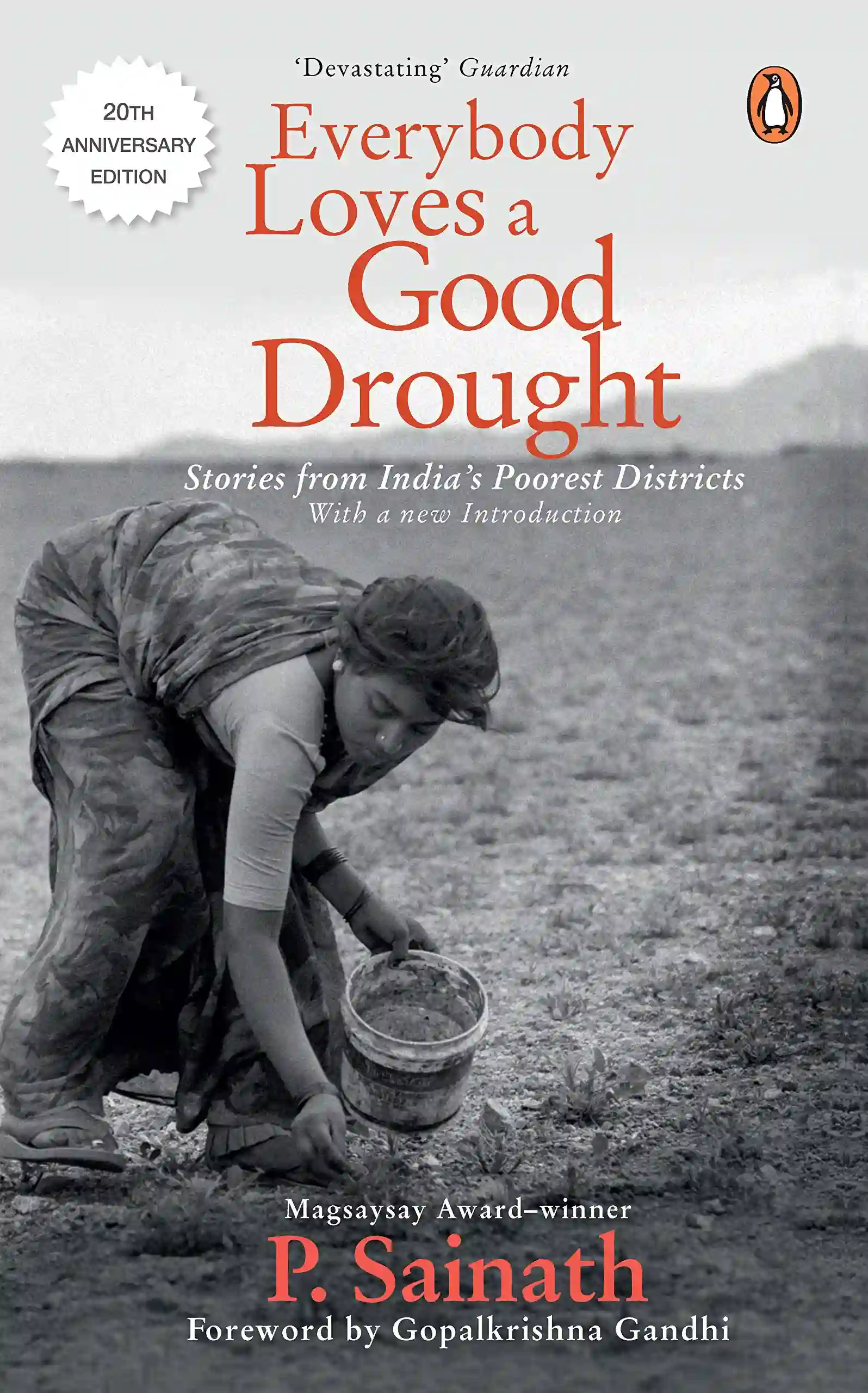
First published in 1996, Everybody Loves a Good Drought by P. Sainath is a landmark work of journalism that sheds light on the plight of rural India. Through compelling investigative reporting and powerful storytelling, Sainath documents the harsh realities faced by marginalized communities in some of India’s poorest districts. The book uncovers the systemic neglect, corruption, and the resilient spirit of people who live under conditions of extreme poverty. Everybody Loves a Good Drought is a sobering account of how deeply entrenched inequality affects rural India, and it continues to be relevant as many of the issues raised remain unresolved.
Investigative Reporting Meets Storytelling
What makes Everybody Loves a Good Drought stand out is its fusion of investigative journalism with vivid storytelling. Sainath doesn’t merely provide facts and statistics; he brings the stories of rural India to life by focusing on individuals and communities. Each chapter offers an intimate look at the lives of people who struggle to survive amidst poverty, drought, and social neglect. Through interviews, case studies, and personal narratives, Sainath paints a vivid picture of the daily hardships faced by the rural poor.
The book goes beyond superficial analysis of poverty. Sainath digs into the root causes—corruption, governmental apathy, and policy failures—that exacerbate the conditions of India’s rural poor. He illustrates how, despite the country’s economic growth, rural areas continue to suffer from systemic neglect. The tone of the book is hard-hitting, yet compassionate. Sainath is not just documenting poverty but also advocating for social change.
Exposing Structural Inequalities
One of the key strengths of Everybody Loves a Good Drought is its relentless focus on structural inequalities that keep rural India in a state of poverty. Sainath does not merely report on the visible effects of poverty but investigates the deeper, systemic issues that perpetuate it. The book shines a light on the failures of government policies, the bureaucratic indifference to the needs of the rural poor, and the corruption that often diverts resources meant for development.
By telling the stories of people living in districts like Warangal, Bundelkhand, and Kalahandi, Sainath exposes the harsh realities of life in rural India—where droughts are not just natural disasters but also a result of systemic neglect. His case studies reveal how the rural poor are often left to fend for themselves, without the support of a government that fails to recognize their needs.
Timeless Relevance
Although Everybody Loves a Good Drought was first published in the 1990s, many of the issues it addresses remain as relevant today as they were when the book was written. The systemic neglect, the lack of adequate infrastructure, and the persistence of rural poverty continue to plague India. The book remains an essential resource for understanding the realities of rural India beyond the glossy statistics often presented in mainstream discourse.
The impact of the book is undeniable. It has been widely praised for its unflinching look at rural poverty, its compassionate portrayal of the people who live in these circumstances, and its ability to humanize complex social issues. It is a must-read for anyone who wants to understand the depth of inequality in India and the resilience of its rural communities.
Strengths of the Book
- Hard-Hitting, Compassionate Journalism: Sainath’s journalism is both powerful and empathetic. His ability to uncover the root causes of rural poverty while giving a voice to the people affected by it is what makes this book a standout. The cases he presents are deeply human, showcasing the resilience of the people despite the odds stacked against them.
- In-Depth Case Studies: The book is rich with case studies that offer an intimate look at the lives of people in rural India. Sainath’s detailed reporting brings to light the everyday struggles and tragedies faced by communities living in poverty.
- Unflinching Exposure of Systemic Neglect: Sainath’s critique of government policies, corruption, and the indifference of the political class towards rural poverty is sharp and uncompromising. He pulls no punches in exposing how governmental and bureaucratic systems often fail the rural poor.
Weaknesses of the Book
- Heavy, Emotionally Intense Read: The book’s density of case studies and the emotionally charged content can make it a heavy read. While this is necessary to fully understand the gravity of the issues discussed, it may feel overwhelming for some readers. The emotional intensity of the stories can be difficult to digest, particularly for those unfamiliar with the harsh realities of rural India.
- Challenging for Casual Readers: For readers looking for a more accessible or lighter take on rural poverty in India, the depth of the case studies and the investigative style of writing might feel too dense. The book is more suited for those willing to engage with its intense and often heart-wrenching content.
Verdict: Essential Reading for Understanding Rural India Beyond Statistics
Everybody Loves a Good Drought is a deeply impactful and necessary book for anyone seeking to understand rural India beyond the surface-level statistics that often dominate the narrative. P. Sainath’s compassionate, investigative journalism offers a rare and powerful glimpse into the lives of India’s rural poor, exposing systemic issues while highlighting the resilience of the people affected by them.
Although the emotional intensity and density of the case studies may make the book a challenging read, its impact is undeniable. It is essential reading for anyone interested in social issues, rural development, or the inequalities that persist in modern India.
Rating: 4.7/5
Strength: Hard-hitting, compassionate journalism that humanizes rural poverty.
Weakness: Heavy, emotionally intense read that may be difficult for some readers.
For more details and to purchase the book, visit Everybody Loves a Good Drought on Amazon.