
Share This Article
Introduction
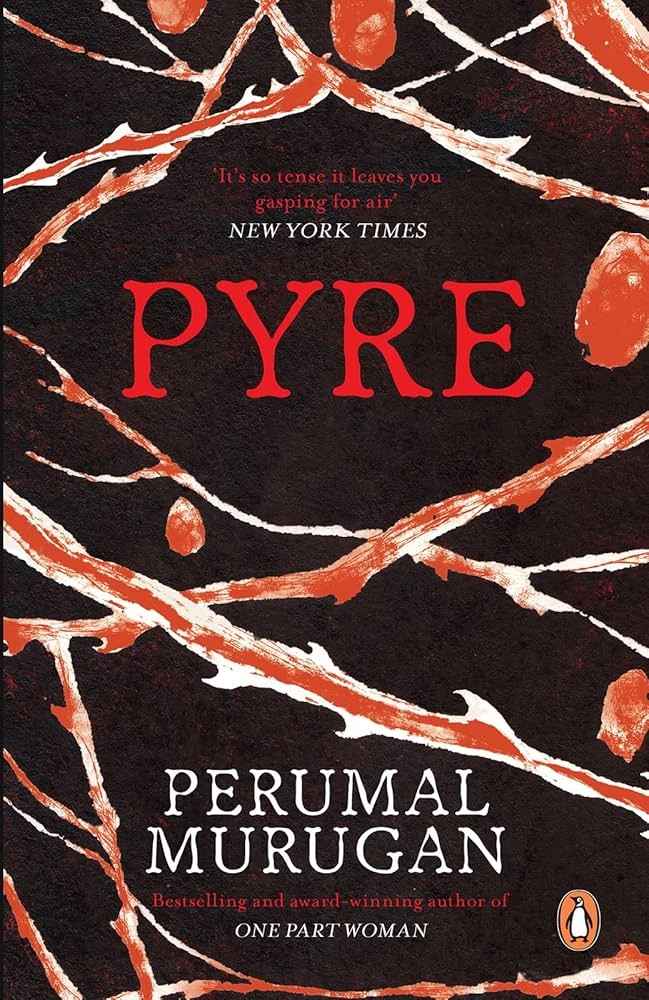
First published in Tamil in 2013 and later translated into English by Aniruddhan Vasudevan, Pyre by Perumal Murugan is a poignant and searing exploration of caste, violence, and intolerance in rural India. The novel tells the story of Saroja and Kumaresan, a young inter-caste couple who, after their marriage, return to Kumaresan’s village to face the harsh consequences of breaking social boundaries. As their love is tested by cruelty, hatred, and the unyielding weight of caste-based discrimination, the novel unfolds into an unflinching portrait of caste oppression and the dangers of defying deeply entrenched social norms.
While Pyre may be simple in plot, its emotional impact is deeply devastating. Murugan’s stark yet lyrical prose reveals the beauty of love amidst the brutality of rural realities, making it a haunting and unforgettable read.
A Stark Yet Lyrical Love Story
At its heart, Pyre is a love story—one that is both tender and tragic. The couple, Saroja and Kumaresan, are bound by love but torn apart by the rigid caste hierarchies of their village. Their desire to be together is not just a personal wish but an act of defiance against the social order that dictates who can marry whom based on caste. When they return to Kumaresan’s village, the weight of this defiance proves to be overwhelming, and their relationship becomes the battleground for a brutal struggle against the social order.
Murugan’s prose is both stark and lyrical, capturing the essence of rural life and the pain of discrimination with great sensitivity. He masterfully contrasts the tenderness between Saroja and Kumaresan with the brutality they face from society, making the novel a powerful commentary on the dangers of caste-based divisions and the human cost of breaking those boundaries. The novel’s simplicity in plot belies its emotional depth, as it paints a raw and heartbreaking picture of how caste shapes the lives and destinies of individuals.
An Unflinching Portrait of Caste Oppression
One of the most striking aspects of Pyre is its honest and unflinching portrayal of caste violence. The novel does not shy away from depicting the horrific consequences of challenging caste boundaries, exposing the cruelty and violence that often follows such transgressions. Murugan captures the reality of caste-based oppression with a searing intensity, showing how deeply ingrained these social hierarchies are, even in contemporary rural India.
The violence in the novel is not just physical but also emotional and psychological, as the couple faces ostracism, hatred, and threats from their own families and community members. Their love, instead of being celebrated, becomes the source of unimaginable suffering. Through Saroja and Kumaresan’s journey, Murugan lays bare the dehumanizing effects of caste discrimination, illustrating the intense struggles that people in lower castes endure in their fight for dignity and equality.
Strengths of the Book
- Honest and Unflinching Portrayal of Caste Violence: Pyre does not sugarcoat the brutal realities of caste oppression. It exposes the harshness of the caste system with a raw honesty that makes it impossible to ignore. Murugan’s portrayal of the emotional and physical toll on the couple is both devastating and powerful.
- Lyrical yet Stark Prose: Murugan’s writing strikes a perfect balance between starkness and lyricism. His ability to depict the beauty of love in the face of such overwhelming cruelty lends the story an emotional depth that stays with the reader long after the book is finished.
- Emotional Impact: The novel’s minimalist plot allows its emotional weight to shine. The simplicity of the narrative, paired with the deep humanity of the characters, creates a story that is both painful and poignant. The book’s impact is undeniable, leaving readers with a profound sense of the injustices suffered by those who defy caste-based norms.
- Authentic Depiction of Rural Life: Murugan’s portrayal of rural India is deeply authentic. The novel captures the complexities of village life, including the communal tensions, superstitions, and social divides that define the everyday existence of its inhabitants. This authenticity adds another layer of depth to the story, making it feel grounded and real.
Weaknesses of the Book
- Minimalistic Plot: While Pyre‘s simplicity adds to its emotional power, the minimalistic plot may feel too bare for some readers. The novel’s focus on the couple’s struggles within the context of their love story may feel repetitive or lacking in action for those looking for a more complex narrative structure.
- Emotional Intensity: The novel’s unflinching portrayal of caste violence and the psychological trauma faced by the characters can be emotionally intense. The starkness of the narrative may be overwhelming for some readers, particularly those who find it difficult to engage with such heavy themes.
Verdict: A Haunting Tale of Love Crushed by Caste Realities
Pyre is a haunting and emotionally devastating novel that explores the destructive power of caste and the human cost of breaking social boundaries. Perumal Murugan’s portrayal of Saroja and Kumaresan’s love story—tender, tragic, and full of longing—intersects with the brutal realities of caste violence, making it an unforgettable read. The novel’s stark yet lyrical prose, along with its honest exploration of rural life and caste-based discrimination, make it a powerful addition to contemporary Indian literature.
Though its minimalist plot may feel bare for some, the novel’s emotional impact is undeniable. Pyre is an essential read for anyone interested in understanding the deep-seated issues of caste oppression and the human cost of breaking the societal norms that bind us.
Rating: 4.7/5
Strength: Honest, unflinching portrayal of caste violence and emotional depth.
Weakness: Minimalistic plot may feel too bare for some readers.
For more details and to purchase the book, visit Pyre on Amazon.