
Share This Article
Author Introduction
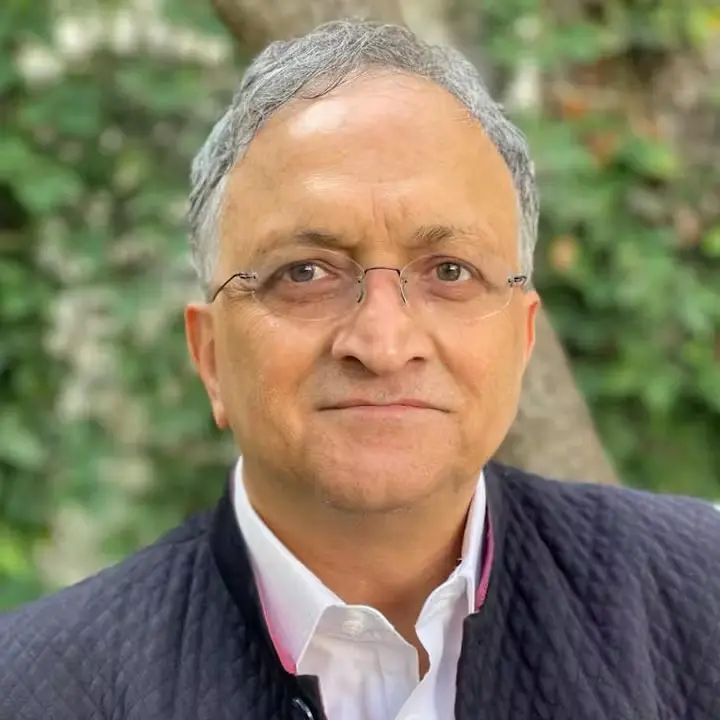
Ramachandra Guha is a renowned Indian historian, writer, and public intellectual, celebrated for his extensive research on modern Indian history and environmental studies. Known for his lucid prose and balanced perspectives, Guha has been one of the most respected voices in contemporary historiography. His works often explore India’s democratic journey, social transformations, and cultural narratives.
Early Life & Background
Born on April 29, 1958, in Dehradun, Uttarakhand, Guha grew up in a family of academicians. His father, Subramaniam Ramdas, was an officer in the Forest Research Institute, which greatly influenced Guha’s early exposure to environmental issues. He studied at The Doon School, later graduating in Economics from St. Stephen’s College, Delhi. He pursued his postgraduate studies at the Delhi School of Economics before completing a PhD in Sociology from the Indian Institute of Management Calcutta, where his research focused on the social history of forestry in India.
Writing Journey
Guha’s early works concentrated on environmental and social history, particularly related to forests and cricket. He soon gained recognition with books like The Unquiet Woods and A Corner of a Foreign Field. His magnum opus, India After Gandhi (2007), offered a groundbreaking narrative of India’s post-independence history, establishing him as one of the leading historians of his generation.
Published Works
- History & Politics: India After Gandhi (2007), Gandhi Before India (2013), Gandhi: The Years That Changed the World (2018).
- Environmental Studies: The Unquiet Woods (1989), Ecology and Equity (1994).
- Culture & Biography: Savaging the Civilized (1999), Patriots and Partisans (2012).
- Sports History: A Corner of a Foreign Field (2002).
Writing Style & Themes
Guha’s writing combines rigorous research with accessible storytelling. His themes range from post-independence politics, environmental struggles, and Gandhian philosophy to cricket and cultural debates. He is known for clarity, fairness, and the ability to weave individual lives into larger historical narratives.
Achievements & Recognition
- Winner of the Sahitya Akademi Award (2008) for India After Gandhi.
- Awarded the Padma Bhushan (2009), India’s third-highest civilian award.
- Listed among the “Top 100 Global Thinkers” by Foreign Policy magazine.
- Fellowships at prestigious institutions like Yale, Stanford, and the London School of Economics.
Beyond Writing
Guha has taught at leading universities worldwide and is a frequent commentator on public issues in India. His columns appear in leading newspapers, where he writes on politics, society, and sports. Apart from academia, he is an avid cricket enthusiast and has contributed significantly to sports history.
Future Projects
Guha continues to work on Indian history and Gandhi studies. While he announced The Next Thousand Years project earlier, his ongoing work suggests more explorations into India’s social and political legacy.
Quotes / Writing Philosophy
“An historian should never be an ideologue. A historian’s only ideology should be accuracy.” – Ramachandra Guha