
Share This Article
Published (English Edition): 2021
Genre: Literary Fiction | Historical Fiction | Indian Literature in Translation
Rating: ★★★★☆ (4.6/5)
Buy Here: Delhi: A Soliloquy on Amazon
Overview
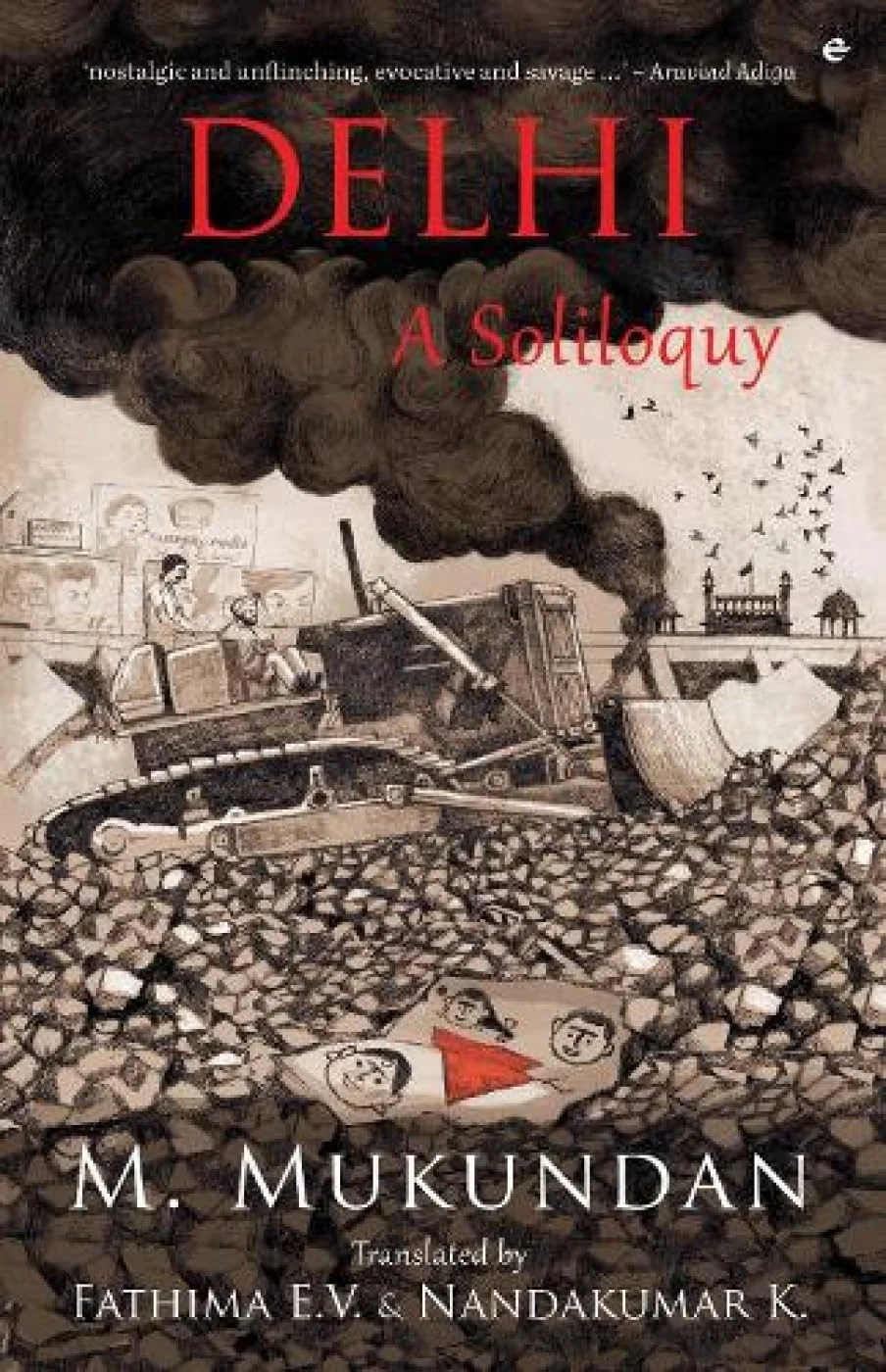
Delhi: A Soliloquy by M. Mukundan, translated from Malayalam by Fathima E.V. and Nandakumar K., is a masterful literary chronicle of the Malayali migrant experience in India’s capital city.
Winner of the Sahitya Akademi Award (2021), this novel unfolds between the 1960s and the 1980s, tracing the intertwined lives of Malayali men and women who move to Delhi in search of work, belonging, and meaning.
Through their eyes, Mukundan paints a sweeping portrait of Delhi’s evolution — from a sleepy post-independence city to a complex, sprawling metropolis — while revealing how migration reshapes identity, memory, and home.
Themes and Style
Migration and Belonging
At its heart, Delhi: A Soliloquy is a meditation on displacement — both physical and emotional. The Malayali migrants in the novel live on the margins of the city, negotiating between cultural roots and urban alienation.
Mukundan’s narrative explores:
- The search for identity in a city that never fully accepts outsiders
- The intersection of personal and political histories
- The nostalgia for home and the bittersweet nature of belonging
The characters’ inner monologues and fragmented memories create a chorus of voices — a collective “soliloquy” that speaks for millions who migrate in search of a better life.
Delhi as a Living Character
Mukundan’s Delhi is not merely a backdrop; it is a living, breathing organism. Through detailed imagery — crowded bazaars, dusty government offices, narrow alleys, and monsoon-soaked streets — the city itself becomes a symbol of change, ambition, and loss.
It mirrors the migrants’ inner journeys — vast, unpredictable, and filled with quiet yearning.
A Translation with Soul
The translation by Fathima E.V. and Nandakumar K. captures the poetic rhythm and cultural nuance of the original Malayalam text. The English version maintains Mukundan’s lyrical tone and emotional subtlety, offering global readers access to a deeply Indian narrative without losing its linguistic essence.
Why This Book Stands Out
A Literary Chronicle of a City and Its Outsiders
Unlike most urban novels that focus on Delhi’s elite or political class, Delhi: A Soliloquy gives voice to ordinary people — teachers, clerks, shopkeepers, and dreamers — who quietly built the city’s social fabric.
Mukundan’s storytelling is deeply empathetic and layered, offering an alternative history of the capital through the eyes of those who lived in its shadows.
A Blend of History, Memory, and Humanity
The novel balances historical realism with emotional depth. Political upheavals like the Emergency, linguistic tensions, and waves of urbanization are woven seamlessly into personal lives — showing how history quietly shapes destinies.
Strengths
✅ Rich Historical Detail: Vividly evokes Delhi’s transformation from the 1960s to the 1980s.
✅ Deeply Human Characters: The migrants’ stories resonate with empathy and truth.
✅ Lyrical Prose: Even in translation, Mukundan’s writing retains its poetic grace.
Weaknesses
⚠️ Slow Pacing: The narrative unfolds gradually, focusing on introspection over action.
⚠️ Multiple Perspectives: The shifting voices may require patience from readers unfamiliar with multi-layered literary fiction.
Verdict
Delhi: A Soliloquy is a poignant and deeply layered work of fiction, blending personal stories with social history. It’s a quiet yet powerful exploration of how cities absorb, change, and sometimes forget their people.
M. Mukundan’s compassionate storytelling transforms the ordinary into the extraordinary, making this one of the most important Indian novels in translation of the 21st century.
Final Rating: ⭐ 4.6/5
A masterpiece of empathy, memory, and migration — as timeless as the city it portrays.
Book Details
| Title | Delhi: A Soliloquy |
|---|---|
| Author | M. Mukundan |
| Translated by | Fathima E.V. & Nandakumar K. |
| Genre | Literary Fiction, Historical Fiction |
| Publication Year (English) | 2021 |
| Publisher | Westland Books |
| Rating | 4.6/5 |
| Buy Link | Amazon India |
FAQs – About Delhi: A Soliloquy
1. What is Delhi: A Soliloquy about?
It’s a novel about Malayali migrants in Delhi, depicting their struggles, dreams, and emotional journeys from the 1960s to the 1980s.
2. Why is this book significant?
It’s considered a landmark in Indian literature, offering a rare perspective on Delhi through the eyes of South Indian migrants — a viewpoint often missing from mainstream narratives.
3. Who are the translators?
The novel was translated from Malayalam by Fathima E.V. and Nandakumar K., whose work retains the emotional and cultural richness of Mukundan’s original prose.
4. What are the main themes?
Major themes include migration, identity, belonging, nostalgia, and urban transformation.
5. Is this a fast-paced novel?
No, it’s a slow, immersive, character-driven work that rewards patient readers with its emotional and historical depth.
6. Who should read this book?
Ideal for readers interested in literary fiction, translations, migration studies, and Indian urban history.
Final Thoughts
M. Mukundan’s Delhi: A Soliloquy is a quiet triumph of storytelling — a book that listens rather than shouts, observes rather than judges. It’s a city novel unlike any other, written with compassion, precision, and cultural depth.
As Delhi continues to evolve, Mukundan’s characters remind us of the countless lives woven into its history — people who came seeking home, and in the process, gave the city its soul.