
Share This Article
Introduction
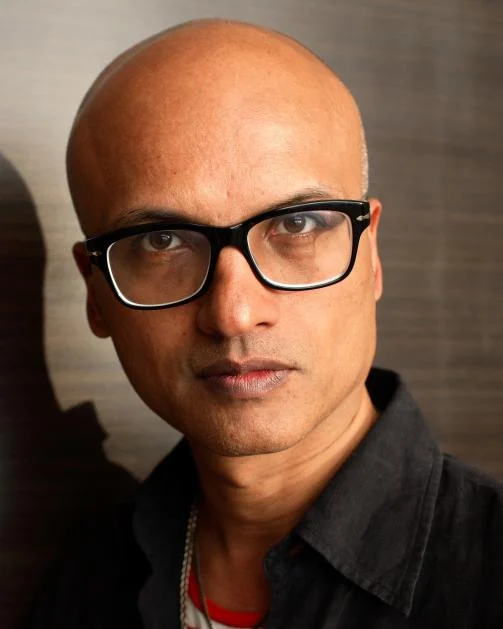
Jeet Thayil is an Indian poet, novelist, librettist, and musician, celebrated for his bold, unflinching explorations of addiction, art, and urban life. His writing captures the pulse of India’s literary and artistic underworld, marked by lyrical prose, dark humor, and raw emotional intensity.
Thayil’s work delves into the chaos and beauty of human experience — his characters often inhabit the margins, navigating the complexities of addiction, creativity, and redemption. With a unique blend of poetry, music, and narrative experimentation, Thayil has emerged as one of the most daring and original voices in contemporary Indian literature.
Early Life & Background
Born in Kerala in 1959 and raised in Mumbai, Jeet Thayil grew up surrounded by art, language, and rhythm. His father, T.J.S. George, was a renowned writer and journalist, and this literary environment fostered his early passion for storytelling.
Thayil studied English Literature at Bombay University and later spent years abroad, experiences that shaped his cosmopolitan outlook and artistic sensibility. His early exposure to poetry and music played a defining role in his creative evolution, blending literary craft with musical rhythm — a synthesis evident in both his verse and fiction.
Writing Journey
Jeet Thayil began his career as a poet, publishing several critically acclaimed collections that explored themes of alienation, memory, and urban despair. Over time, he expanded into fiction and performance art, bringing his poetic intensity into the realm of storytelling.
His debut novel, Narcopolis (2012), a hypnotic exploration of drug culture and human fragility in 1970s Bombay, won him international acclaim and a shortlisting for the Man Booker Prize. It introduced readers to Thayil’s signature style — lush, rhythmic, and fearless in its portrayal of addiction and desire.
His second novel, The Book of Chocolate Saints (2017), cemented his reputation as a master of urban mythology, blending biography, fiction, and social commentary through the life of a fictional poet, Francis Newton Xavier. The novel serves as both a meditation on art and a lament for lost brilliance.
Beyond novels, Thayil has also written librettos for operas, including Babur in London, and continues to be active in performance poetry and music collaborations, showcasing his commitment to cross-disciplinary expression.
Published Works
| Title | Year | Genre / Focus |
|---|---|---|
| Narcopolis | 2012 | Novel – Addiction, Art, Urban Decay |
| The Book of Chocolate Saints | 2017 | Novel – Genius, Self-Destruction, Literary Culture |
| Apocalypso | 2004 | Poetry – Mortality, Faith, Irony |
| These Errors Are Correct | 2008 | Poetry – Love, Loss, Redemption |
| English | 2005 | Poetry – Language, Identity, Urban Life |
Thayil’s bibliography reflects a restless, experimental spirit — his works cross the boundaries of genre, form, and medium, constantly reinventing the relationship between poetry and prose.
Writing Style & Themes
Jeet Thayil’s writing is raw, urban, and immersive, known for its musical prose, emotional candor, and hallucinatory detail. His style merges poetic lyricism with street-level realism, offering a gritty yet transcendent vision of life in modern India.
Recurring Themes
- Addiction and Recovery: The body and soul as battlegrounds of self-destruction and redemption.
- Artistic Genius and Fame: The cost of creation in a world obsessed with image and immortality.
- Urban Loneliness: The search for connection in fractured, chaotic cities.
- Faith and Mortality: Philosophical reflections on spirituality and decay.
His narratives are often fragmented, rhythmic, and cinematic, reflecting both his poetic background and his experience as a musician. Each sentence hums with intensity — capturing the ecstasy and despair of existence.
Achievements & Recognition
- Shortlisted for the Man Booker Prize (2012) for Narcopolis, making him one of India’s most globally recognized contemporary novelists.
- Recipient of several literary honors, including the Sahitya Akademi Award (2022) for English Fiction.
- Widely regarded as a trailblazer in modern Indian poetry, particularly for his urban and confessional style.
- Regularly featured at international literary festivals, art residencies, and academic symposiums.
- Acclaimed by critics for his fusion of music, art, and literature, reshaping the contours of postcolonial Indian writing.
Thayil’s recognition goes beyond awards — his work has been praised for expanding the emotional and aesthetic possibilities of Indian English literature.
Beyond Writing
In addition to his literary achievements, Jeet Thayil is also an accomplished musician and performer. He is a guitarist and songwriter, having collaborated with various artists on projects that merge spoken word, jazz, and electronic soundscapes.
He has co-written librettos such as Babur in London, an experimental opera exploring religion and identity, and continues to advocate for creative intersections between art forms.
His deep engagement with performance poetry and multimedia storytelling positions him as a true modern polymath — an artist who refuses confinement to a single genre.
Future Projects
Jeet Thayil is currently working on new novels and poetry collections that continue his exploration of contemporary urban life, addiction, faith, and artistic obsession. His upcoming works are expected to expand his literary universe, drawing from both his personal experiences and his observations of global artistic culture.
He also continues to collaborate with musicians and theatre artists, integrating literature, music, and performance into his evolving artistic practice.
Quotes / Writing Philosophy
“Art is messy, intoxicating, and dangerous; it is life itself.” – Jeet Thayil
This quote encapsulates Thayil’s creative philosophy — that art is not a refuge from chaos but a reflection of it. His writing, like his life, refuses neatness or moral simplicity. It celebrates the flawed, the broken, and the beautiful, insisting that true art emerges from the tension between ecstasy and despair.
Conclusion
Jeet Thayil stands as one of the most distinctive and fearless voices in Indian literature today — a poet-novelist whose work is equal parts music, confession, and rebellion. His stories and poems illuminate the intersections of art, addiction, and faith, offering readers an unfiltered look into the depths of human vulnerability.
Through his words, Thayil has built a literary world that is both decadent and divine, where creation and destruction coexist. As a writer, musician, and artist, he continues to remind us that to live — and to create — is to embrace the messy, intoxicating essence of life itself.