
Share This Article
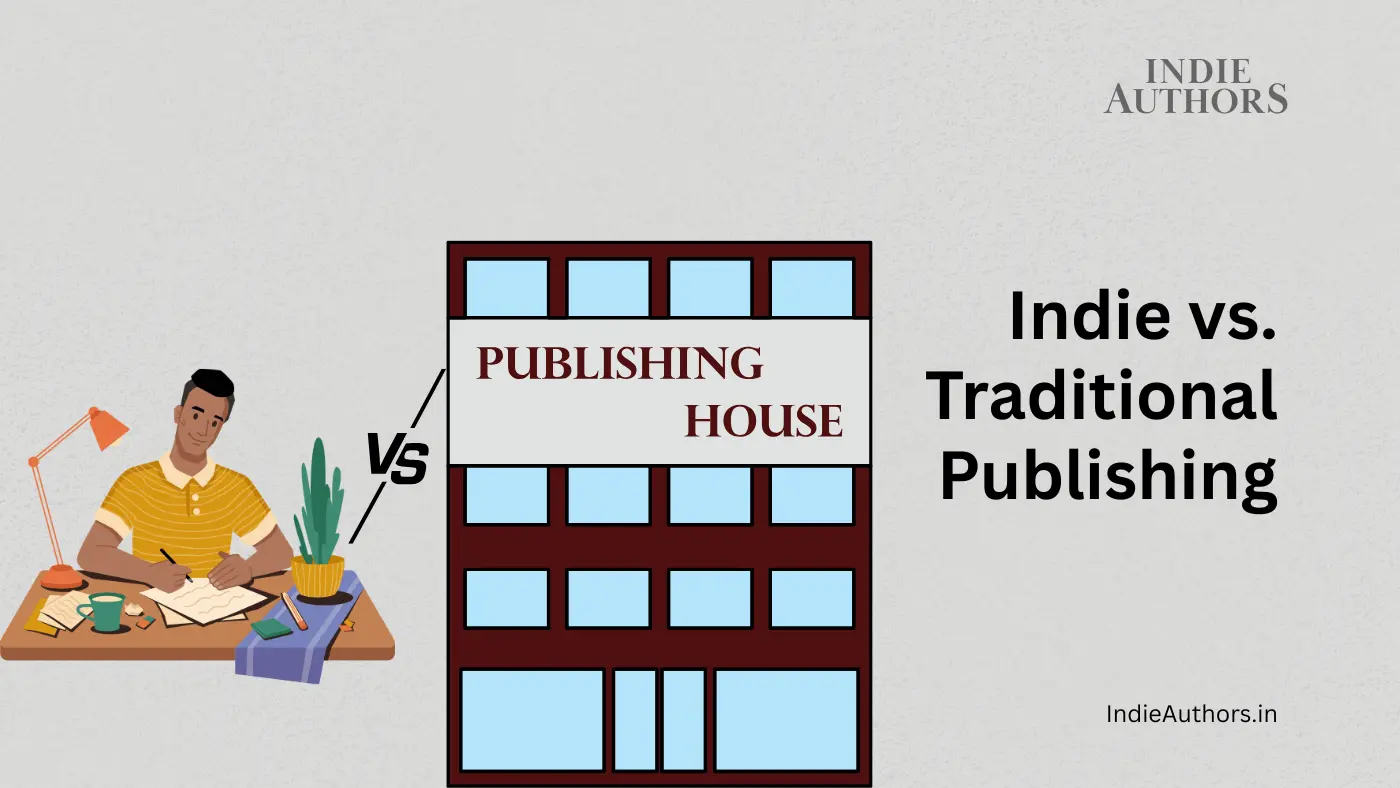
For every writer who dreams of seeing their name on a book cover, there’s a big decision waiting: Should you go indie (self-publishing) or pursue traditional publishing?
Both paths can turn your manuscript into a published book, but they differ in control, cost, distribution, and opportunities. Let’s break down the differences so you can make the best choice for your author journey.
What Is Indie (Self) Publishing?
Indie publishing means you publish your book independently, without going through a traditional publishing house. With tools like Amazon Kindle Direct Publishing (KDP), IngramSpark, Notion Press, Pothi, and Kobo, authors can publish directly in digital or print formats.
- You keep full creative control.
- You set the price, cover design, and distribution channels.
- You earn higher royalties per book but handle marketing yourself.
Think of indie publishing like being an entrepreneur—you own the product and the process.
What Is Traditional Publishing?
Traditional publishing is the “classic” model: you query literary agents or publishers, and if accepted, they handle editing, cover design, printing, distribution, and part of the marketing.
- They invest money and resources into your book.
- You usually get an advance + royalty payments.
- The process is competitive and slower, but it offers industry credibility.
Think of traditional publishing like signing with a big record label—they manage your career, but you give up some control.
Indie vs. Traditional Publishing: A Side-by-Side Comparison
| Factor | Indie Publishing | Traditional Publishing |
| Control | You decide everything: title, cover, pricing, categories, marketing. | Publisher decides most creative & business decisions. |
| Speed | Fast—can publish in weeks or months. | Slow—can take 1–2 years from acceptance to release. |
| Upfront Costs | Often free to publish; you may pay for editing, cover design, marketing. | No upfront cost (publisher invests), but you may still spend on personal marketing. |
| Royalties | Higher (up to 70% on Amazon KDP eBooks). | Lower (5–15% print, 25% eBook standard). |
| Distribution | Global via online stores, POD, eBooks; limited physical bookstore access unless you invest. | Wide physical bookstore & library reach; easier media reviews. |
| Marketing | 100% on you—social media, ads, email lists. | Some marketing provided, but authors are still expected to promote themselves. |
| Credibility | Indie stigma is fading; quality depends on your effort. | Established credibility; seen as more prestigious by media & bookstores. |
| Rights | You retain full rights. | You may sign away certain rights (print, foreign, audio). |
Pros of Indie Publishing
- Creative freedom—publish the book you want.
- Higher royalties and faster payouts.
- Global reach via Amazon, Kobo, Apple Books.
- Ability to test ideas and publish multiple books quickly.
Example: Many successful indie authors in romance and fantasy (Colleen Hoover started indie before traditional picked her up) built huge audiences through self-publishing first.
Pros of Traditional Publishing
- No upfront publishing costs.
- Access to professional editing, cover design, and distribution.
- Better chances at bookstore placement and literary awards.
- Industry credibility and status.
Example: Authors like J.K. Rowling and Salman Rushdie went the traditional route, gaining wide bookstore presence and media attention.
Which Path Should You Choose?
Ask yourself these questions:
- Do you want creative control and faster publishing? → Go Indie.
- Do you want industry prestige, bookstore access, and professional backing? → Aim for Traditional.
- Do you see writing as a business you want to scale quickly? → Indie is often better.
- Do you see writing as a career with patience for gatekeepers? → Traditional fits.
Many modern authors actually blend both: hybrid publishing. They self-publish some titles while pursuing traditional deals for others.
Final Thoughts
There’s no one-size-fits-all answer in the Indie vs. Traditional Publishing debate. What matters is your goals, resources, and personality as an author.
- If you value control and speed, indie publishing gives you freedom.
- If you value prestige and support, traditional publishing opens doors.
At the end of the day, readers care less about how your book was published and more about what’s inside.