
Share This Article
First Published: 1994 | Reissued: 2022
Genre: Graphic Novel | Political Fiction | Environmental Literature
Rating: ★★★★☆ (4.5/5)
Buy Here: River of Stories on Amazon
Overview
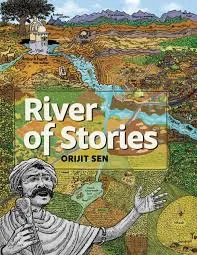
River of Stories by Orijit Sen holds a special place in Indian literary and artistic history — it is India’s first graphic novel, originally published in 1994 and reissued in a 25th-anniversary edition in 2022.
Set against the backdrop of the Narmada Dam controversy, this seminal work tells the story of villagers, activists, and government officials whose lives intertwine amid a battle over land, water, and justice.
Through its vivid illustrations and journalistic storytelling, River of Stories becomes more than a narrative — it is a visual document of resistance, a testament to the enduring struggle between development and displacement in modern India.
Themes and Style
The Narmada Dam Conflict
At the heart of the story lies the Narmada Valley, a site of both natural beauty and human tragedy. Sen captures the tension between progress and preservation, showing how the government’s dam project threatens to submerge not just villages but entire ways of life.
The novel foregrounds:
- Environmental activism and ecological consciousness
- Displacement and social justice
- The silencing of marginalized voices in India’s development narrative
A Fusion of Art and Activism
Orijit Sen’s storytelling is bold and visual, combining journalistic rigor with artistic emotion. Each panel is carefully crafted to reflect not only the landscape but also the psychological impact of loss, hope, and defiance.
The black-and-white art style, while simple, carries emotional gravity. It mirrors the stark realities of the story, ensuring the focus remains on the people and their fight for dignity.
Why This Book Stands Out
A Pioneer in Indian Graphic Storytelling
Before the global popularity of graphic novels like Persepolis or Maus reached India, Orijit Sen was already exploring how visual narratives could address complex political themes. His work paved the way for contemporary Indian graphic artists such as Sarnath Banerjee and Amruta Patil.
Relevance That Transcends Time
Even decades after its first release, River of Stories remains hauntingly relevant. The questions it raises — about development, human rights, and environmental destruction — continue to define India’s political and ecological landscape today.
Strengths
✅ Visually Compelling: The illustrations powerfully capture emotion and movement, bringing realism to the page.
✅ Socially Powerful: A raw, honest portrayal of activism and resistance.
✅ Pioneering Spirit: A trailblazer for Indian visual literature.
Weaknesses
⚠️ Dated Format: Readers accustomed to modern, digitally rendered graphic novels may find the art style and layout old-fashioned.
⚠️ Pacing: The narrative’s documentary tone occasionally slows down the emotional rhythm.
Verdict
River of Stories is more than a graphic novel — it’s a cultural milestone. Through its art and activism, Orijit Sen transforms the Narmada struggle into a timeless story of human resilience.
For anyone interested in environmental issues, Indian politics, or visual storytelling, this book is a must-read. Its honesty, urgency, and compassion make it an enduring masterpiece.
Final Rating: ⭐ 4.5/5
A groundbreaking and socially resonant work that remains as relevant in 2025 as it was in 1994.
Book Details
| Title | River of Stories |
|---|---|
| Author | Orijit Sen |
| Genre | Graphic Novel, Political Fiction |
| Publication Year | 1994 (Reissued 2022) |
| Publisher | Blaft Publications |
| Rating | 4.5/5 |
| Buy Link | Amazon India |
FAQs – About River of Stories
1. What is River of Stories about?
It’s a graphic novel about the Narmada Dam conflict, depicting how local villagers, activists, and bureaucrats navigate the turmoil surrounding displacement and development.
2. Why is this book significant?
It is widely recognized as India’s first graphic novel, setting the stage for an entire genre of politically conscious visual literature in the country.
3. How does Orijit Sen tell the story?
Through hand-drawn illustrations and reportage-style narration, Sen merges journalism, art, and empathy to portray real human struggles.
4. What are the major themes?
The novel explores ecological destruction, displacement, state power, and grassroots activism — all through a human lens.
5. Is the reissued edition different?
The 2022 anniversary edition features refreshed artwork, an updated introduction, and historical context, enhancing its impact for new readers.
6. Who should read this book?
Perfect for readers interested in graphic novels, environmental literature, political activism, and Indian contemporary art.
Final Thoughts
Orijit Sen’s River of Stories stands as a visual epic of resistance — a reminder that art can indeed be a force for change. It tells us that rivers are not just sources of water, but lifelines of memory, identity, and justice.
Nearly three decades later, its message is louder than ever: progress without compassion is just another form of destruction.