
Share This Article
Verdict: A heartbreaking yet beautiful read, The God of Small Things is one of those novels that leaves an indelible mark on its readers.
Introduction

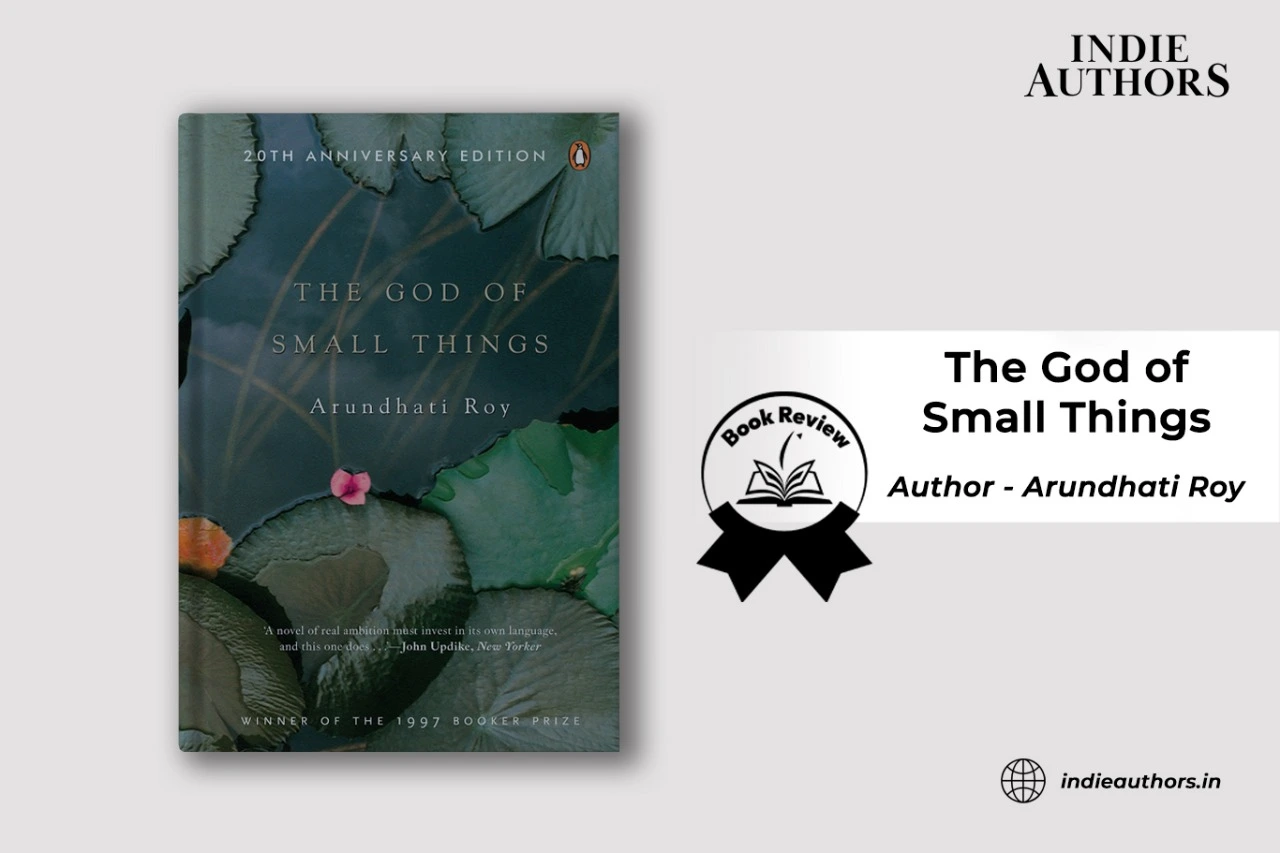
Arundhati Roy’s debut novel, The God of Small Things, is as lyrical as it is devastating. Published in 1997, it instantly captured global attention and went on to win the Booker Prize. Set against the lush backdrop of Kerala, the novel explores themes of childhood, memory, caste, and forbidden love.
Plot Overview
The story revolves around twins Estha and Rahel, who navigate a fractured family and the complexities of love, loss, and social boundaries. At the heart of the novel is the forbidden relationship between their mother, Ammu, and Velutha, a man from a lower caste. This love, deemed unacceptable by society, sets in motion events that forever alter their lives.
Narrative Style
One of Roy’s most striking choices is her non-linear storytelling. The narrative shifts between past and present, mirroring the fragmented way memory works. Her prose is lush, lyrical, and deeply poetic, often bending grammar and structure to capture the rhythm of childhood imagination and lived experience.
Themes Explored
- Caste and Social Hierarchies
- Love and Loss
- Childhood and Memory
- Family and Fragmentation
Strengths
- Beautiful, Poetic Style
- Emotional Impact
Weaknesses
- Nonlinear Structure
- Emotional Weight
Overall Verdict
Despite its challenging structure, The God of Small Things is a modern classic that rewards patient readers. It’s a novel that doesn’t just tell a story but immerses readers in an atmosphere—lush, intense, and unforgettable.
Rating
⭐ 4.6/5
A heartbreaking yet beautiful masterpiece that blends poetry with pain, leaving readers profoundly moved.
Buy Your Copy of The God of Small Things
👉 Amazon India
👉 Flipkart
👉 Penguin India (Official)
FAQs about The God of Small Things
1. Why is The God of Small Things famous?
Because it won the Booker Prize in 1997 and introduced the world to Arundhati Roy’s distinctive, poetic voice.
2. Is The God of Small Things based on a true story?
While inspired by real-life settings and cultural issues, the novel is fictional.
3. Why is the narrative non-linear?
Roy wanted to mimic how memory works—fragmented, fluid, and emotional rather than chronological.
4. What is the main theme of the novel?
It critiques caste oppression while exploring love, memory, and family.
5. Is it difficult to read?
The poetic style and non-linear structure may challenge some readers, but many find it rewarding.
6. Who should read it?
Readers who enjoy literary fiction with depth, lyricism, and cultural critique.