
Share This Article
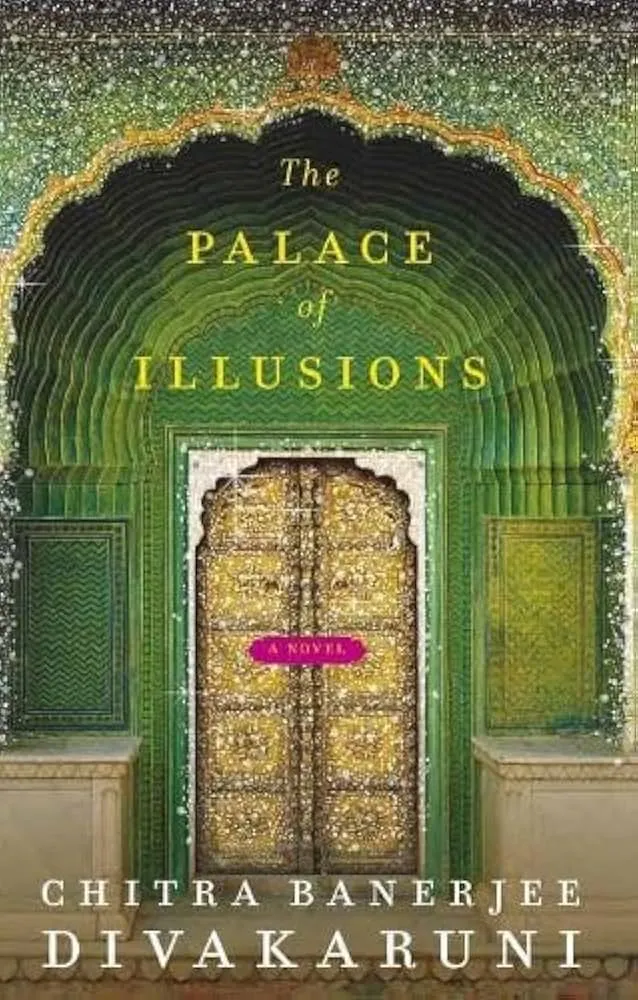
Book Review: The Palace of Illusions
Author: Chitra Banerjee Divakaruni

Rating: 4.4/5
Overview:
Published in 2008, The Palace of Illusions offers a feminist retelling of the *Mahabharata* through the eyes of Draupadi. By shifting the perspective, Divakaruni gives voice to a character who is often reduced to silence or victimhood, transforming her story into one of strength, vulnerability, and longing.
The prose in the novel is rich and lyrical, blending the grandeur of mythology with the deep emotions of its characters. The themes of love, destiny, power, and injustice resonate strongly, making the story just as relevant in today’s world as it was in ancient times. Through Draupadi’s eyes, we explore a world where duty, desire, and personal identity collide, making the narrative both personal and epic.
What makes The Palace of Illusions unique is its challenge to traditional narratives of epic heroes. Instead of glorifying the familiar male protagonists, the novel shines a light on the silenced perspective of Draupadi, a woman caught between her duties as a wife and her own desires. While the liberties taken with the *Mahabharata* may feel too bold for some purists, this reinterpretation adds a fresh, modern twist to the classic epic.
Strengths:
- Strong Feminist Perspective: The novel powerfully reimagines Draupadi’s story, giving voice to a character often overshadowed by male protagonists in the original epic.
- Lyrical Storytelling: Divakaruni’s writing is poetic and evocative, making the themes of love, destiny, and power resonate deeply with readers.
Weaknesses:
- Appeal to Purists: The book’s liberties with traditional mythology may not appeal to readers who prefer the more conventional interpretations of the *Mahabharata*.
Verdict:
The Palace of Illusions is a beautifully written novel that reimagines a classic epic from a powerful female perspective. Divakaruni’s lyrical prose and fresh take on Draupadi’s story bring new life to the *Mahabharata*, offering a perspective that is both timeless and relevant today.
Buy the Book:
You can purchase The Palace of Illusions by Chitra Banerjee Divakaruni from Amazon:
Frequently Asked Questions (FAQ)
1. What is the central theme of *The Palace of Illusions*?
The central theme of the novel is Draupadi’s journey, as she navigates the intersection of duty, desire, and destiny. The story explores the complexities of power, love, and justice, while offering a feminist perspective on a story that has traditionally been dominated by male protagonists.
2. How is the *Mahabharata* retold in *The Palace of Illusions*?
In *The Palace of Illusions*, the *Mahabharata* is retold through Draupadi’s eyes. Divakaruni reimagines the epic from her perspective, offering a new lens to examine the ancient story. The novel focuses on Draupadi’s emotions, desires, and struggles, rather than centering on the traditional male heroes of the epic.
3. Is the book faithful to the original *Mahabharata*?
While the novel is based on the *Mahabharata*, it takes certain liberties with the mythology in order to give Draupadi a stronger voice and agency. This makes the story feel both familiar and fresh, though purists of the *Mahabharata* may find the reinterpretation bold.
4. Is *The Palace of Illusions* suitable for readers unfamiliar with the *Mahabharata*?
Yes, the novel is accessible to readers who may not be familiar with the *Mahabharata*. While some references may resonate more deeply with those familiar with the epic, Divakaruni’s writing and the novel’s themes are universal and engaging for new readers as well.
5. How does *The Palace of Illusions* compare to other feminist retellings of myths?
In comparison to other feminist retellings, *The Palace of Illusions* stands out for its deep emotional exploration of Draupadi’s character and its bold reimagining of a traditional epic. The novel focuses on personal agency, desire, and the complexity of being a woman in a patriarchal society, offering a unique and powerful perspective on a well-known mythological tale.